COUPONS YOU CAN’T USE

This is a jolting wake up call. Thanks for bringing this to our attention on your Facebook Page, Manuel Costa.
Eric
==========
Every little bit helps, no?”
Well, no.
The notion that “every little bit helps” is just a comforting illusion.
One of the main dissonances in the climate change debate, on the increasingly rare occasions we are now having a debate at all, is that between the cheerfully mundane remedies pressed on us all, and the sheer scale of the problem to hand: if we all did a little, such as cutting back on standby power, using a clothesline instead of a dryer and so forth, the cumulative effect will add up to a lot, won’t it? But this is, to use a cheerful quote from Cambridge physicist David MacKay, “crazy innumerate codswallop.”\
Read more: Every little bit doesn’t really help.
There are lots of reasons for living a more minimalist life. By owning less you reduce your impact on the environment, you spend less, and you live more simply.
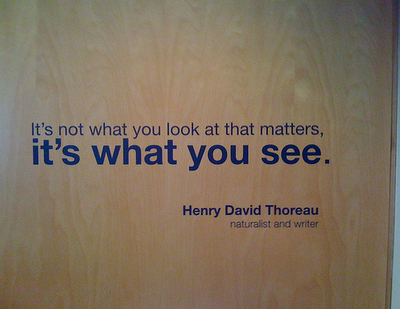
For Henry David Thoreau, the reason for spending less boiled down to a simple formula. It’s what I call “the life calculation.” Here’s how Thoreau describes it:
The cost of a thing is the amount of what I will call life which is required to be exchanged for it, immediately or in the long run.
Why live more simply? Because the more stuff we buy, the more we end up exchanging our life for the things we own. This is a radical way of thinking about cost. Normally, we think of cost as a measure of dollars and cents. The latest iPhone costs $399. A new Toyota Prius costs around $25,000. A house on the beach in Malibu costs $20,000,000. You get the idea.
Thoreau’s key insight is that the things we buy don’t just cost money, they cost us time, effort, and sacrifice. They cost us our life.
Thoreau’s Guide to Living More by Spending Less – by Dumb Little Man

According to positive psychologists, saying ‘thank you’ is no longer just good manners, it is also beneficial to the self…
Since, for most of us, expressing our thanks is an everyday occurrence, we tend to think nothing of it. But psychologically it has a very important role to play for both the person giving and the person receiving.
[Full article] Why ‘Thank You’ Is More Than Just Good Manners — PsyBlog

Next event - Fall 2011
-- details to be announced