The FullCircles Blog

Multi-contributor blog on the topic of reusing, freecycling… garbology in general.

Archive for December, 2011

Austerity House: Completely Made Over with Reclaimed Goods

http://www.dailymail.co.uk/news/article-2079784/The-austerity-house-Couple-completely-make-home-reclaimed-goods.html?ito=feeds-newsxml

Couple completely make over their home with reclaimed goods

  • They snaffled items worth £35,000 new for a fraction of price
  • Bed made from scaffold poles, tiles from fireman’s hoses, seatbelts for curtain ties
  • ‘We don’t have two knives that are the same and we use old jars for glasses’

By SIMON TOMLINSON

In these belt-tightening times, it always helps to shop around to get the best deal.

But one couple have taken that philosophy to the extreme by completely transforming their home simply with reclaimed goods.

Kresse Wesling and James Henrit bought their two-bedroom flat last year when it was little more than a shell.
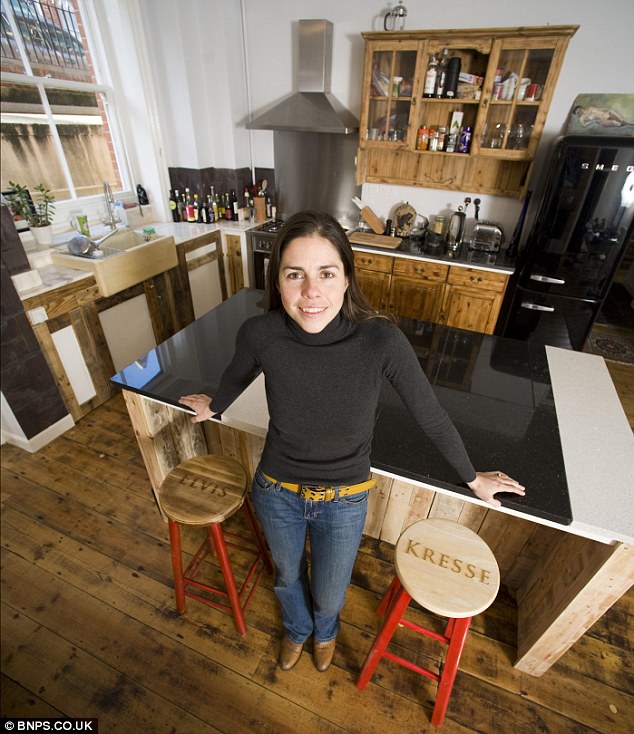
 

Bargain-hunter: Kresse Wesling in her kitchen with her granite and marble work top made from reclaimed off cuts and and a friend's fireplace. She and James Henrit have saved thousands by decking out their one-bedroom flat with unwanted itemsBargain-hunter: Kresse Wesling in her kitchen with her granite and marble work top made from reclaimed off cuts and and a friend’s fireplace. She and James Henrit have saved thousands by decking out their one-bedroom flat with unwanted items
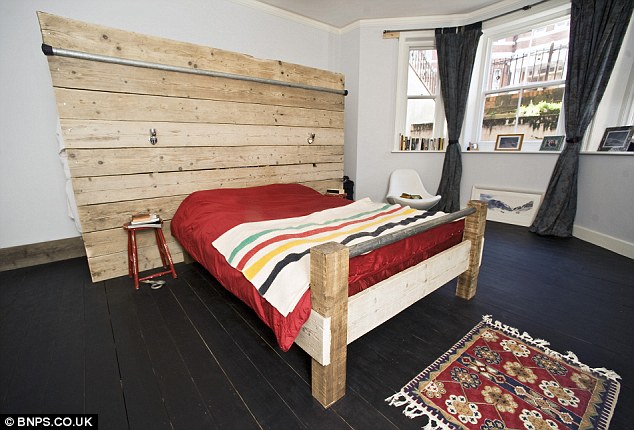


Industrious: The couple have made this bed out of reclaimed scaffolding boards and bars to save on buying a new oneIndustrious: The couple have made this bed out of reclaimed scaffolding boards and bars to save on buying a new one
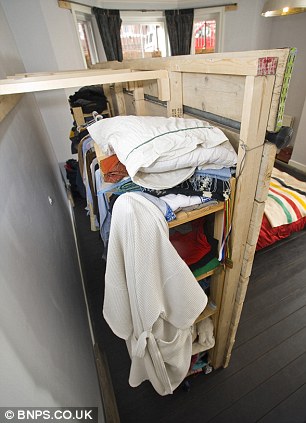


The scaffolding board hides a walk-in wardrobe
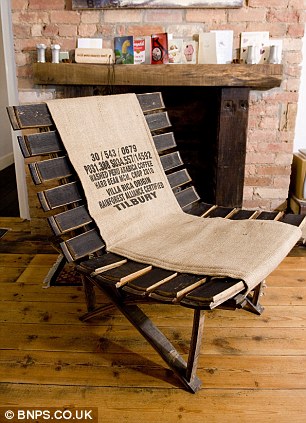
A lounge chair made from a wine barrel

Crafty: The bed’s scaffolding board hides a walk-in wardrobe (left), while this chair (right) has been fashioned from a wine barrel


Trawling charity shops and tips, and searching on websites Gumtree, Freecycle and eBay, the pair managed to create an incredible home from items no-one wanted.


What would have cost about £35,000 using new materials has been done for under £3,000 – albeit with thousands of man-hours.


Their bed is made from scaffold poles, the kitchen is created from reclaimed wood and granite and the tiles in their hallway are made from old firemen’s hoses.
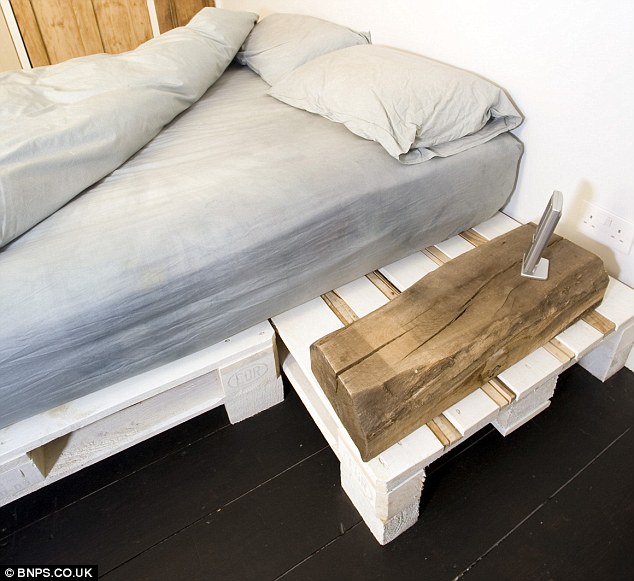


Pallet-able: This bed has been lovingly made using painted wooden crates. The couple call their technique 'upcycling' - taking quality, unwanted goods and making them like newPallet-able: This bed has been lovingly made using painted wooden crates. The couple call their technique ‘upcycling’ – taking quality, unwanted goods and making them like new
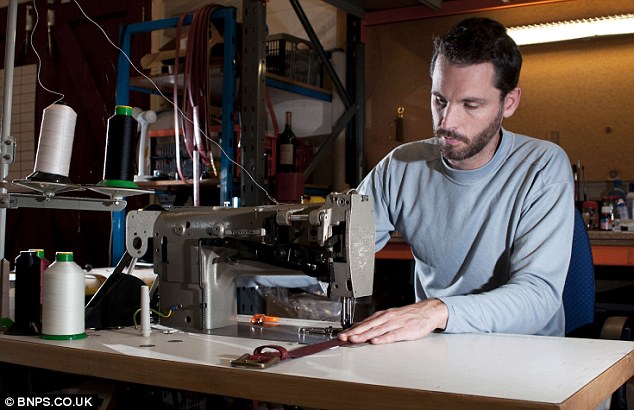


Got it sewed up: James Henrit makes adjustments to a belt in the couple's workshop, which they used to custom-make their cut-price findsGot it sewed up: James Henrit makes adjustments to a belt in the couple’s workshop, which they used to custom-make their cut-price finds
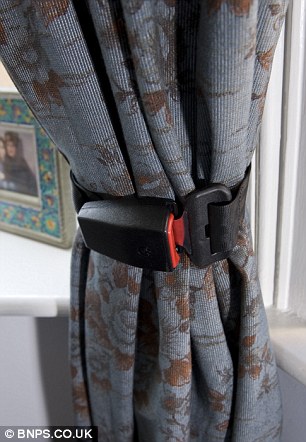


Buckling up: In a feat of true resourcefulness, the curtain ties have been created from BMW seatbelts
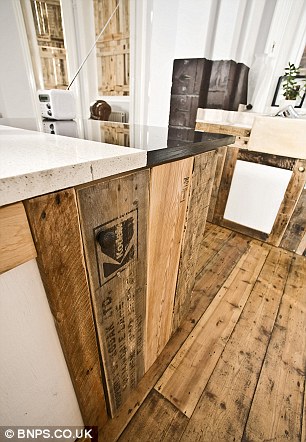
Food for thought: Wooden pallets have also been used to make the kitchen cupboards. The couple say the kitchen is where they saved the most cash

Buckling up: In a feat of true resourcefulness, the curtain ties (left) have been created from BMW seatbelts, while wooden pallets have also been used to make the kitchen cupboards (right)

Kresse, 34, said: ‘We bought the flat a year ago and it was little more than a shell.

‘There was no heating and no sewage and our aim was to put nothing new in it at all.

‘Of course there had to be some compromise – electrical wire for example had to be new.

‘One of the few things we had to buy new was the toilet – we couldn’t find a second hand one.

‘Mostly when they are thrown out they are cracked so we had to buy a new one – we were very disappointed about that.

‘The floors were covered in lino and it took us five days to get it off and underneath were beautiful wooden floorboards.’
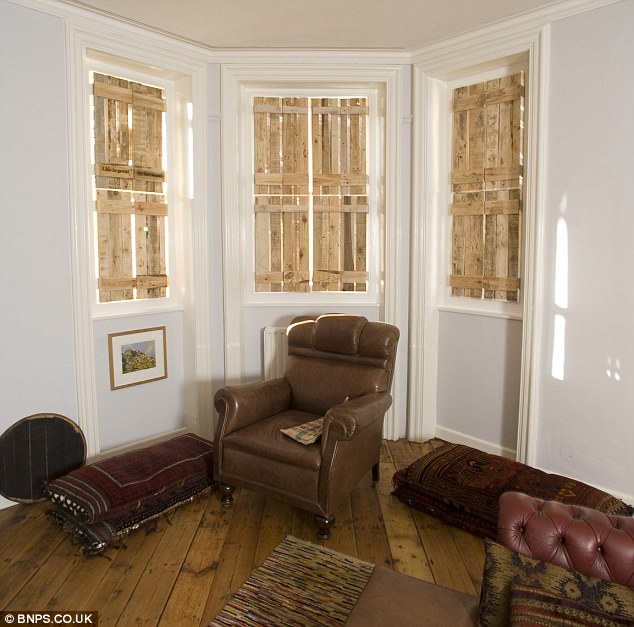
Lounge act: The window shutters have also been fashioned from wooden pallets, while the furniture was picked up for peanuts or even freeLounge act: The window shutters have also been fashioned from wooden pallets, while the furniture was picked up for peanuts or even free 
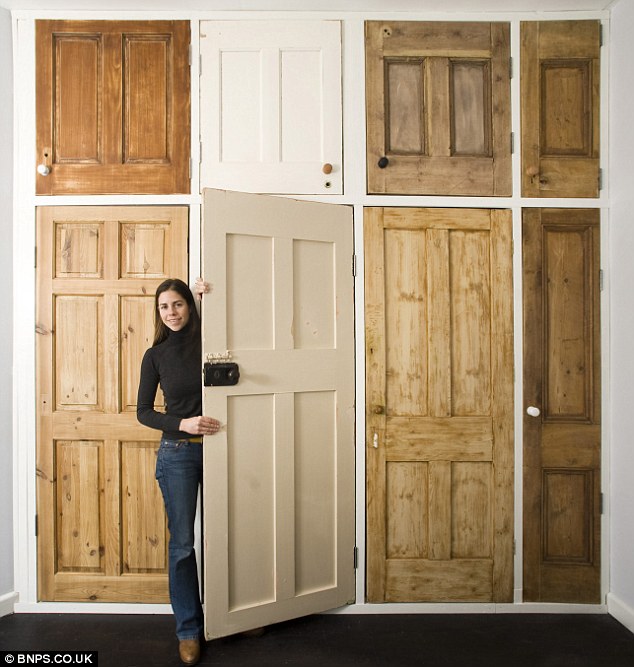
No burden on the wallet: Kresse with the eight cupboard doors she found at a tip. Her cost-cutting wasn't without man-hours, however, as many items needed work to bring them up to scratchNo burden on the wallet: Kresse with the eight cupboard doors she found at a tip. Her cost-cutting wasn’t without man-hours, however, as many items needed work to bring them up to scratch
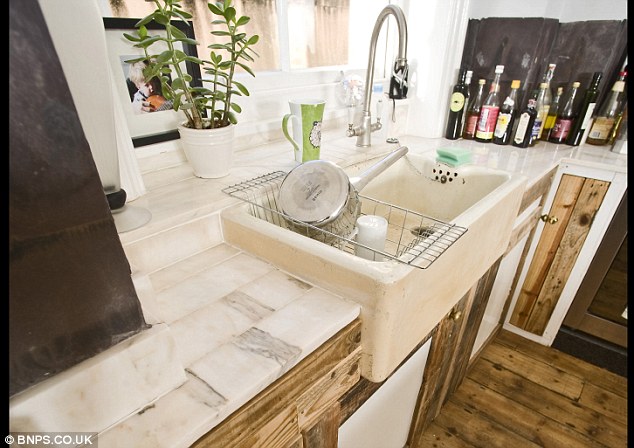


Saving cash: The kitchen sink was found in woods while the couple were out walking, the white granite work top was made from a friend's fireplace and the tiles are reclaimedSaving cash: The kitchen sink was found in woods while the couple were out walking, the white granite work top was made from a friend’s fireplace and the tiles are reclaimed


SO WHAT WERE THEIR BEST FINDS?

Kresse and James were delighted after snapping up a second-hand SMEG fridge, worth £1,200 new, for free.

They fashioned granite sideboards in the kitchen, which would usually would cost £500-600, for nothing by sourcing unwanted offcuts.

The couple were also pleased when they managed to snaffle pallets and scaffolding wood to make two beds, saving hundreds of pounds.

They also paid nothing for the large ceramic kitchen sink, of which similar styles can fetch anywhere up to £200 new.

The eight large wardrobe doors also made no impact on the wallet – again saving hundreds of pounds.


A disused work bench has been turned into a dining table and other furniture including the sink has been found at dumps and transformed into spectacular pieces.


Much of the furniture was made from pallet wood and a painting hanging in their front room was created by a friend.


The couple call their technique ‘upcycling’ – taking quality goods nobody wants or is selling cheaply and making them like new.


A bathroom mirror was picked up from a firm that makes them and was about to be thrown out because it was not quite perfect.


Cutlery and crockery was found in charity shops and the bathroom tiles were made from reclaimed Welsh slate.


Their TV was a present and their range and fridge were snapped up from websites offering second-hand goods.


The website Freecycle provided them with a Chesterfield sofa and carpets were provided by Kresse’s collection of old Tibetan rugs.


The couple, from Bournemouth, Dorset, have also turned their passion into their living and now run a company – Elvis and Kresse – that sells upcycled goods.
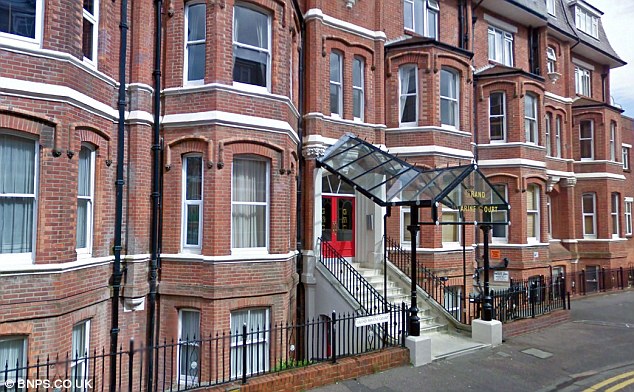


Transformation: The couple's two-bedroom flat (in this block above) was just a shell when they bought it last yearTransformation: The couple’s two-bedroom flat (in this block above) was just a shell when they bought it last year
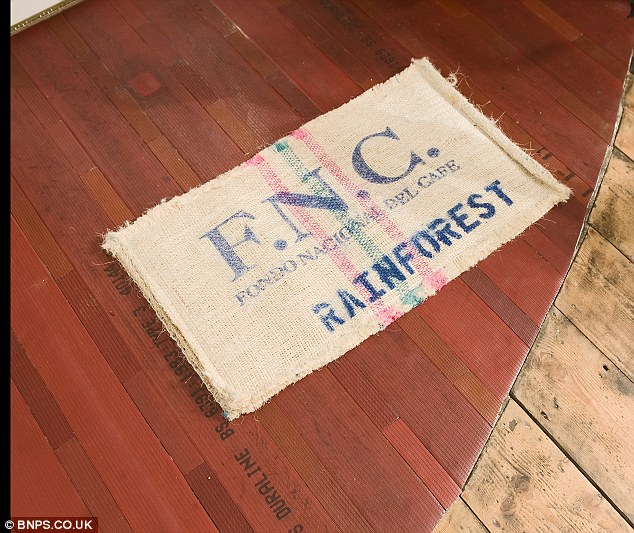


Water steal! This red welcome mat is made from waterproof, hard-wearing fire-hoseWater steal! This red welcome mat is made from waterproof, hard-wearing fire-hose
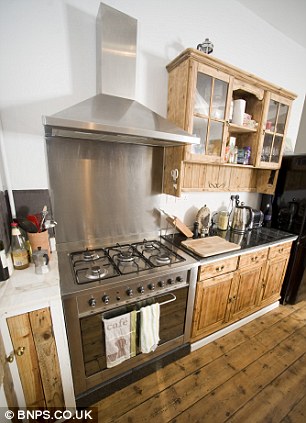
The wooden kitchen units have been made from a modified 'dresser'
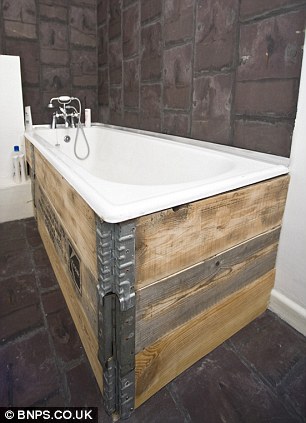
Tub-thumping: The bathroom tiles have been created from reclaimed Welsh slate, and the bath is lined with scaffolding boards

The wooden kitchen units (left) have been made from a modified ‘dresser’ found at the dump, while the bathroom tiles (right) have been created from reclaimed Welsh slate. The bath is lined with scaffolding boards


Kresse added: ‘Our bed and closet were made from scaffolding poles and we found many things at the dump or in charity shops.


‘We don’t have two knives and forks that are the same and we use old jars for glasses.


‘But we have a lovely Chesterfield sofa and Tibetan rugs in the floor and Welsh slate tiles in the bathroom.


‘We have proved it can be done as long as you keep your mind open and are prepared to do the work.


‘We estimated that doing the work with new materials would cost about £30-35,000 and we have spent a fraction of that.’

 

Read more: http://www.dailymail.co.uk/news/article-2079784/The-austerity-house-Couple-completely-make-home-reclaimed-goods.html#ixzz1hvyefiP2


Tags:
posted by Gub in Foodstuffs for Thought and have No Comments

Ice cream, Al Gore, and Freecycle

[Repost of my blog entry from Jun/07 - egs]


Ice Cream, Al Gore, and Freecycle 

What do they have in common? Not much… and a LOT!

And, why include them in a single posting?   Because it helps us gain a little perspective… hopefully it shines a little light. Light on a subject where there is lot of heat but not much light.

First Al Gore and Freecycle…

The image �http://images.egstcm.multiply.com/image/1/photos/upload/orig/R1FsIwoKCmkAAH5e-hg19/2.jpeg?et=ePX2IZmanUxFM11lD4PyyA� cannot be displayed, because it contains errors.

Did Al Gore invent the Internet?
No… turns out that rumor which circulated a few years ago was part of a Bush smear campaign to discredit Gore. Politics!! But, the Internet did come on the scene more publicly during Al Gore’s watch as VP of the USA. Gore wasted a lot of his energies dispelling the rumor.

Did Deron Beal invent Freecycling?
No… But, unlike Al Gore, it often looks like he really believes he did! Absolutely no question about it! Beal did a great thing in 2003, recognizing waste and creatively mashing up unused, unwanted, but still usable stuff with the Internet (Yahoo! groups) to create an appealing, easy-to-use, Internet-mediated vehicle for local redistribution and reuse.  But, he did a bad thing by getting sucked in to thinking he “owned” it. Instead of spending his energies spreading the idea and encouraging a zillion flavors in every nook and cranny of the planet, he misguidely (in my humble view) spent his energies and his resources making lawyers rich by chasing “ownership”, trademarks, and control. Images of Moses standing in the Bay of Fundy, hopelessly attempting to control the largest tide in the world come to my mind.

Freecycling is a bit like a tide, a tsunami sweeping the planet. Sweeping the planet because our species is beginning to recognize in a panic that in order to survive and thrive on this planet, humans need to get their insatiable appetite for stuff controlled, stopped, and reversed. That’s my take on why there is so much passion around Freecycling at this time in our history as a species.

And last, there’s ice cream.
Who owns ice cream? What’s the history of ice cream? How many flavors of ice cream are there? 30, 50, 1000???

Really, who cares!  The more, the better! As long as they are good, wholesome, healthy and safe!  Same thing with Freecycle! Who really cares what label the act of freecycling has! The more labels the better. Just so long as every human does it… a lot!! Freecycling, reuse, conservation and stewardship of resources, are behaviors that need to become acceptable/desirable, automatic habits globally in the interests of the survival of our species on this planet. Otherwise we are going to consume the planet, cook it by incinerating anything that will burn in order to power our bloated lifestyles and populations growing uncontrollably.

That’s what I’ve been thinking early on this June 2nd, 2007 Saturday morning in Canada’s capital city!

Eric Snyder
Ottawa Canada
===========

PS: And another afterthought… Freecycle… That label doesn’t really reflect what “freecycling” is about at all. Because freecycling isn’t really about recycling. Recycling is defined as “Reprocessing used or abandoned materials to create new products. For example, glass can be crushed and then refired to form new glass having perfect quality.”

Freecycling, at least as we have been practicing it here in Ottawa, Canada is largely about re-using as defined here - “To use again, especially after salvaging…” Freeuse might have been a more apt label for the movement. And, if you think about it, REcycling should only be a last resort, after an item has been completely “cycled”, ie. used up for its original use and any secondary reuses.

posted by Gub in Freecycling and have No Comments

10 Reasons to Shop Local

10 Reasons to Shop Local | greenUPGRADER.

by LiveOAK Staff 
Shop Local

“Going local does not mean walling off the outside world. It Means nurturing locally owned businesses which use local resources sustainably, employ local workers at decent wages and serve primarily local consumers. It means becoming more self-sufficient and less dependant on imports. Control moves from the boardrooms of distant corporations and back into the community where it belongs.”

- Michael H. Shuman, author of the book Going Local.

Choosing greener alternatives is important for sustainability but where you shop in many cases is the most important factor.   Shopping locally is important for environmental sustainability as well as economic sustainability.  When you shop locally you are supporting members of your own community who are also vested in the heath and success of the community.  You are also travelling less and requiring less things to be shipped meaning less carbon, pollution and traffic congestion.

I was psyched when I found this graphic while perusing one of my favorite sites (Elephant Journal), which led me to Local First.  Local First an organization aimed at promoting sustainabile economic devolpment in the greater Grand Rapids, MI area.  There I found a list of 10 resons to shop local.  There are far more than just 10 but the internet likes lists and the number 10 so to start here is a version of their list I tweaked a bit…

1. Local Economic Stimulus.

When you purchase at locally owned businesses rather than nationally owned, more money is kept in the community because locally-owned businesses often purchase from other local businesses, service providers and farms. Purchasing local helps grow other businesses as well as the local tax base.

2. Non Profits Receive Greater Support.

Local business owners donate more to local charities than non-local owners.

3. Unique Businesses Create Character & Prosperity

The unique character of your local community is defined in large part by the business that reside there, and that plays a big factor in your overall satisfaction with where you live and the value of you home and property.

4. Environmental Impact Is Reduced.

Small local business usually set up shop in the town/village center, providing a centralized variety that is much friendlier to a community’s walk score than out of town shopping malls.   This generally means contributing less to sprawl, congestion, habitat loss and pollution.

5. Most New Jobs Are Provided By Local Businesses.

Small local businesses are the largest employers nationally.  Plus the more jobs you have in your local community the less people are going to have to commute which means more time and less traffic and pollution.

6. Customer Service Is Better.

Local businesses often hire people with more specific product expertise for better customer service.  You are also going to see these people around town and they are less likely to blow you off or be rude becauses they have to face you day after day.

7. Local Business Owners Invest In Community.

Local businesses are owned by people who live in this community, are less likely to leave, and are more invested in the community’s welfare and future.

8. Public Benefits Far Outweigh Public Costs.

Local businesses require comparatively little infrastructure and more efficiently utilize public services relative to chain stores.

9. Competition And Diversity Leads To More Consumer Choices.

A marketplace of thousands of small businesses is the best way to ensure innovation and low prices over the long-term.

10. You Matter More

We talk a lot about exerting influence with your purchasing choices, or “voting with your wallet.”  It’s a fact that business respond to their customers but your values and desires are much more influential to you local community business than the large big box stores.

To read more about going local check out Ecolocalizer, a great site that provides news, ideas and inspiration to “Think globally, act locally.”

posted by Gub in Freecycling and have No Comments

Christmas: Most Wasteful Day of the Year?

A man rummaging through a skip at the back of ...

Image via Wikipedia


Professional dumpster diver, Jeff Ferrell thinks so!

“Christmas shouldn’t be the worst most wasteful day of the year, but it really is,” said Ferrell.

The life of a professional dumpster diver – CBS News.

Enhanced by Zemanta
posted by Gub in Freecycling and have No Comments

Why Freecycling must embrace social media / mobile devices


The graphic demonstrates to me pretty clearly why we need to migrate
freecycling to and embrace platforms and devices other than Yahoo!groups
/ email and computers if we have any hope of engaging younger people,
the next generations. The freecycling movement is stuck in an old
1995-6 metaphor, and needs to start striding to the world of 2012. We
have some catch up to do.

The stuck, starting, striding images (above) have been pulled from
climatecounts.org .  Climate Counts is a collaborative effort to bring
consumers and companies together in the fight against global climate change.

Climate Counts scores the world’s largest companies on their climate
impact to spur corporate climate responsibility and conscious
consumption. Our goal is to motivate deeper awareness among consumers
— that the issue of climate change demands their attention, and that
they have the power to support companies that take climate change
seriously and avoid those that don’t.
Eric

posted by Gub in Freecycling and have Comment (1)

Tourtiere – A Canadian tradition?

Tourtiere seems to be a trending topic on Twitter  and Google+  this morning, and it was featured on CBC Ottawa morning radio 1 at 5:45 am.
Our FullCircles friend Winn serves it on Christmas Eve.  But when is tourtiere normally served where you are from?  What’s the tradition? And what is it served with? I don’t really remember tourtiere from my German flavored Manitoba childhood.
Eric
==========
posted by Gub in Foodstuffs for Thought and have No Comments